
Cast iron skillets intimidate many home cooks unnecessarily. These durable pans last generations when maintained properly. Most people damage their cookware through common cleaning mistakes.
This guide reveals professional techniques for cleaning cast iron correctly. You’ll master daily maintenance, deep cleaning methods, and seasoning restoration. Transform your rusty pan into heirloom-quality cookware today.
Why Proper Cast Iron Skillet Cleaning Matters
Cast iron’s porous surface absorbs moisture rapidly. Incorrect cleaning strips essential seasoning layers away. Seasoning creates natural nonstick cooking surfaces through polymerized oil bonds. This protective barrier prevents rust formation completely.
Poor maintenance leads to rust within hours. Chemical reactions between harsh soaps and iron destroy years of built-up patina. Well-maintained skillets actually improve with age. Proper care extends lifespan for decades easily.
Common Mistakes That Ruin Cast Iron
Soaking overnight creates immediate oxidation damage. Modern dish soaps contain aggressive surfactants stripping seasoning. Steel wool gouges protective coating permanently.
Dishwashers combine high heat with detergent. This creates severe rust and pitting. Air-drying allows flash rust development within minutes.
Skipping the re-oiling step leaves bare iron exposed. This guarantees rust formation between uses. One woman soaked her 1920s Griswold skillet after cooking bacon. Within hours, orange rust bloomed everywhere.
What You’ll Need to Clean a Cast Iron Skillet
Basic Cleaning Tools
Coarse kosher salt acts as gentle abrasive. It dissolves without scratching surfaces effectively. Stiff-bristled brushes remove stubborn residue safely. Chainmail scrubbers cost around $10 and last years.
Paper towels or lint-free cloths prevent water spots. Hot water opens iron pores for deeper cleaning. Plastic scrapers remove large chunks without damage.
Safe Oils for Seasoning
| Oil Type | Smoke Point | Best Use |
| Flaxseed | 225°F | Premium restoration |
| Grapeseed | 420°F | Daily maintenance |
| Avocado | 520°F | High-heat cooking |
| Shortening | 360°F | Traditional method |
Grapeseed oil offers the best value. Flaxseed creates hardest finish available. Avoid olive oil and butter completely. Cooking sprays contain damaging propellants always.
Step-by-Step: How to Clean a Cast Iron Skillet After Cooking
Remove Food Residue Safely
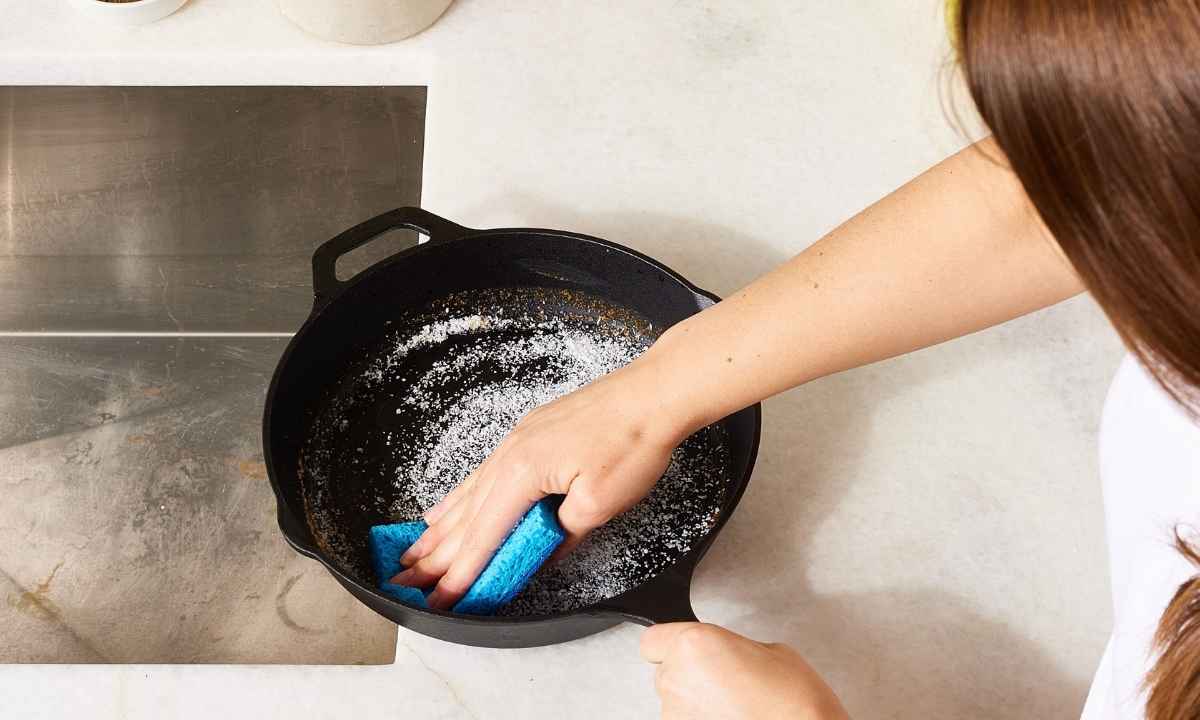
Clean while the skillet stays warm. Scrape large debris with plastic tools. Add 2-3 tablespoons coarse salt directly. Scrub using circular motions with brush.
Drizzle hot water gradually as needed. Create salt slurry for better scrubbing. Work into stubborn stuck-on areas thoroughly. This process takes three minutes maximum.
Rinse Without Damaging the Surface
Use hot running water briefly. Rinse for thirty seconds maximum time. Check for remaining gritty spots carefully.
Modern soaps won’t destroy seasoning layers. Small amounts work fine for greasy messes. Old lye-based soap warnings don’t apply.
Dry Immediately to Prevent Rust
Towel-dry every surface including bottom completely. Heat on stovetop for 2-3 minutes. Apply thin oil layer to warm pan.
Spread evenly with paper towel everywhere. Wipe until skillet looks almost dry. Heat oil into surface for bonding.
How to Deep Clean a Cast Iron Skillet
Removing Stuck-On Food
Fill skillet with water covering debris. Bring to rolling boil for 10 minutes. Stuck food will loosen and float. Pour out while hot and scrub.
Salt scrub paste works for moderate buildup. Mix salt with vegetable oil thoroughly. Scrub vigorously with paper towel bunches. This method preserves existing seasoning layers.
Getting Rid of Rust Spots
Mix equal parts vinegar and water. Submerge rusted skillet for 30 minutes. Never exceed one hour maximum soaking. Vinegar etches iron if left longer.
Scrub rust spots with stiff brush. Rust should flake off relatively easily. Rinse thoroughly with hot water immediately. Dry completely using heat method described.
Check Out More: How to Clean an Oven: Step-by-Step Guide for a Spotless Oven (2026)
How to Re-Season a Cast Iron Skillet After Cleaning
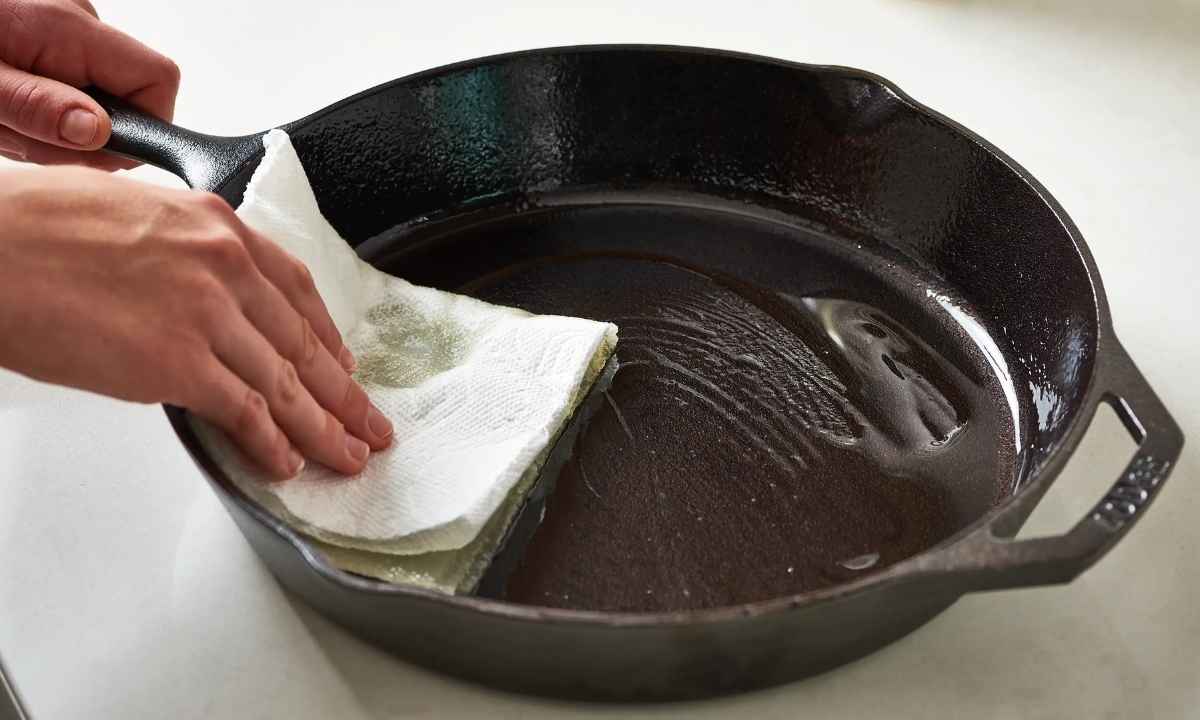
Preheat oven to 450°F for seasoning. Apply extremely thin oil layer everywhere. Wipe until surface appears nearly dry. Excess oil creates sticky coating problems.
Bake upside down for one hour. This prevents oil pooling in surfaces. Let cool inside oven completely undisturbed. Repeat process 3-5 times minimum.
Each layer bonds to previous one. Three layers provide adequate protection initially. Five layers create professional-grade nonstick performance.
Best Oils for Seasoning Cast Iron
Flaxseed oil has highest iodine value. This creates glass-like finish when applied. Grapeseed balances performance with economics perfectly. Sunflower oil works on budgets effectively.
Avoid extra virgin olive oil always. Butter contains milk solids that burn. Coconut oil becomes gummy and sticky. Fresh oil polymerizes better than rancid.
How to Store Cast Iron to Prevent Rust
Store in dry kitchen cabinets safely. Hang on pot racks with spacing. Avoid damp basements or outdoor sheds.
Apply protective oil layer before storing. Place paper towel inside cooking surface. This prevents metal-on-metal contact when stacked. Never use plastic bags or wrap.
Check stored skillets monthly for problems. They should feel smooth and slightly oily. Tackiness indicates storage issues developing rapidly.
Pro Tips to Keep Your Cast Iron Skillet Nonstick and Long-Lasting
Cook bacon weekly for natural seasoning. High-heat searing enhances patina dramatically. Bake cornbread regularly maintaining tradition beautifully. Avoid tomato sauces initially for months. Preheat gradually for even temperature distribution. Use medium heat for most cooking. Let food release naturally without forcing.
Add fat to cold pan always. Use generous amounts preventing sticking completely. Heat clean skillet weekly until smoking. This adds protective layers continuously. Weekly seasoning boosts take five minutes. Monthly inspections prevent major problems developing. Quarterly maintenance ensures optimal performance always.
Conclusion
Cast iron maintenance proves surprisingly simple actually. Clean while warm using salt and water. Dry immediately preventing rust formation always. Apply thin oil after every use. Seasoning builds through regular cooking sessions naturally.
Your skillet improves with age continuously. Start implementing these techniques today for heirloom-quality cookware. Hand this knowledge down to future generations proudly.