
A messy bathroom cabinet can turn your morning routine into a frustrating search mission. Whether you are dealing with a small medicine cabinet or a large under-sink space, knowing how to organize bathroom cabinet the right way saves you time, reduces stress, and keeps your bathroom looking clean every day.
This guide walks you through a simple, practical system that actually works and stays organized long-term.
Why Bathroom Cabinet Organization Matters
Most people underestimate how much a disorganized bathroom costs them. Expired products pile up, duplicate items get purchased, and daily routines slow down because nothing has a proper place.
An organized bathroom cabinet improves hygiene by removing old and expired products, saves time during busy mornings, maximizes storage space in even the smallest bathrooms, and makes the whole room feel cleaner and calmer.
Step 1: Empty Everything Out First
Before you organize, you need a clean slate. Pull every single item out of your cabinet, drawers, and under-sink area. Place everything on the counter or floor where you can see it clearly.
Once everything is out, go through each item and sort into three groups. Keep items that are current and regularly used. Toss anything expired, nearly empty, or unused for over six months. Donate duplicates or unopened products you no longer want.
This decluttering step is the most important part of the whole process. Skipping it means you are just reorganizing clutter, not fixing it.
Step 2: Clean the Cabinet Before Restocking
While the cabinet is empty, wipe down every shelf, drawer base, and corner. Use a damp cloth first to remove dust and residue, then follow with an all-purpose cleaner to sanitize. Leave the doors and drawers open to dry completely before adding anything back. Trapped moisture causes mold and unpleasant smells over time.
This is also a great time to add drawer liners. They protect the base of your drawers and make future cleaning much easier.
Step 3: Group Items Into Categories
Now that you have only the items you are keeping, sort them into logical groups. This step helps you figure out how much storage space each category needs.
Common bathroom cabinet categories include:
Daily essentials such as toothbrush, toothpaste, face wash, and moisturizer. Skincare and makeup products. Hair care items like brushes, styling products, and hair ties. Medications and first aid supplies. Cleaning products and extra supplies. Spare and backup items.
Grouping by category makes it much easier to assign specific zones inside your cabinet so you always know where to look.
Step 4: Assign Zones Based on How Often You Use Items
Placement matters as much as organization. Use this simple rule: the more you use it, the easier it should be to reach.
| Placement Zone | Best For |
| Eye level or top shelf | Daily use items like skincare and toothpaste |
| Middle shelf | Hair care products, makeup |
| Lower shelf or under sink | Backup supplies, cleaning products, extra towels |
| Cabinet door | Quick-grab items, small accessories |
| Drawer | Small items like bobby pins, nail clippers, cotton swabs |
This zoning system means you never have to dig through the cabinet just to find your daily face wash.
Step 5: Use the Right Storage Tools
The right organizers make a massive difference in how well your cabinet stays tidy. You do not need to spend a lot of money, but choosing the right type of storage for each item helps everything stay in place.
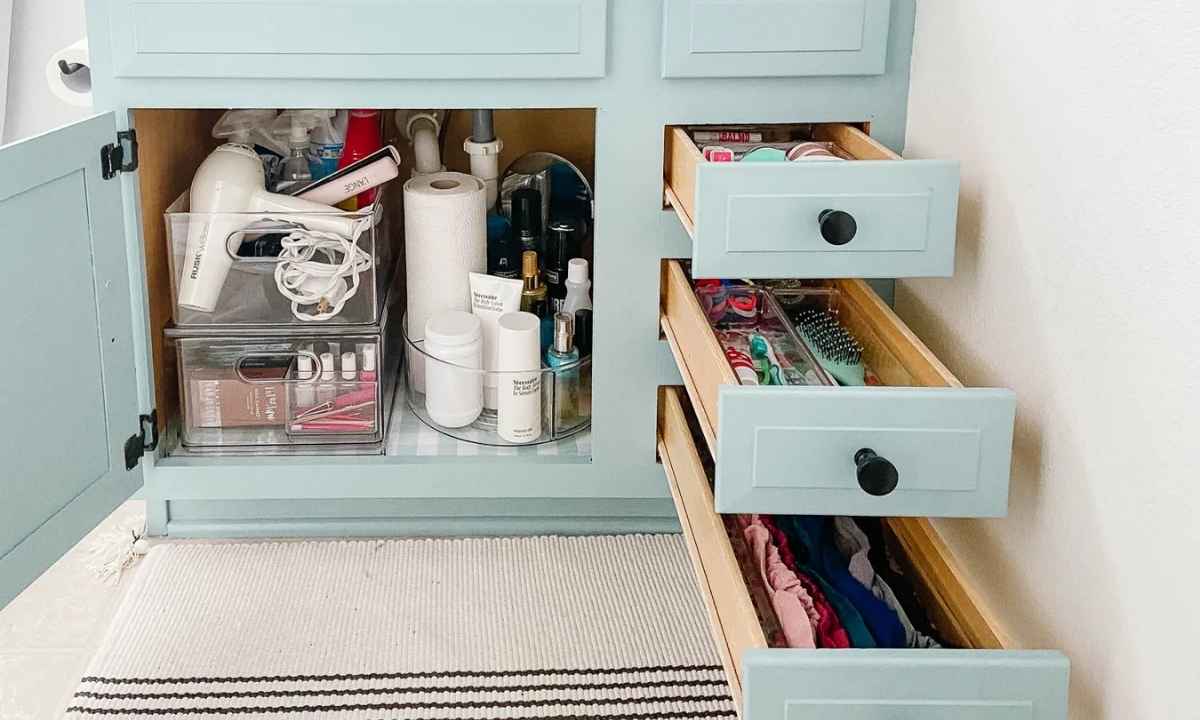
Clear acrylic bins and drawers let you see contents at a glance without pulling everything out. Turntables or lazy Susans work especially well inside deep cabinets or under the sink where items at the back tend to get lost. Stackable bins help you use vertical space, which is often completely wasted in standard bathroom cabinets. Shelf risers create an extra level inside a single shelf, effectively doubling your storage. Drawer organizers keep small items separated and prevent them from shifting around. Cabinet door organizers, either adhesive bins or over-the-door pockets, add storage without taking up any shelf space.
For under-sink cabinets where plumbing takes up room, a turntable on one side and slim stackable drawers on the other makes smart use of awkward shapes.
Step 6: Organize Specific Areas the Right Way
How to Organize Under the Sink
Under-sink space is often the most underused area in the bathroom. Use stackable bins with labels for each product category. Store cleaning supplies separately from personal care items. A small basket for toilet paper and one for hair tools keeps things neat without making it feel cramped.
How to Organize Bathroom Drawers
Drawers get messy fast because items roll around and mix together. Place drawer liners at the base, then use a drawer organizer with separate compartments. Keep one drawer for oral care items, one for daily skin and hair essentials, and a separate one for miscellaneous small items.
How to Organize a Medicine Cabinet
A medicine cabinet above the sink is ideal for daily-use products. Keep only what you use every single day at eye level. Store medications safely and check expiry dates every month. Small magnetic strips inside the door can hold tweezers, nail files, and other metal tools.
Step 7: Label Everything for Long-Term Maintenance
Labels are not just for aesthetics. They are the secret to making an organization system last. When every bin and shelf has a clear label, every family member knows where things go. This prevents the gradual drift back into chaos that happens in most bathrooms within a few weeks.
If you use clear containers, labels may not always be necessary since the contents are visible. But for opaque bins, baskets, or drawers, labels are essential.
Tips to Keep Your Bathroom Cabinet Organized Long-Term
Spend five minutes every week doing a quick reset and wiping down surfaces. Check expiry dates on medications and skincare products once a month. Do a full reorganization every three to four months as your needs change. Avoid buying products in bulk unless you have clear storage space for extras. Bring back everything to its assigned zone after each use.
Common Bathroom Cabinet Organization Mistakes to Avoid
Storing too many items without regular decluttering. Ignoring vertical space inside the cabinet. Placing everyday items in hard-to-reach areas. Not separating cleaning supplies from personal care products. Skipping labels, especially in shared bathrooms.
FAQs
How do I organize a small bathroom cabinet with limited space?
Use vertical stackable bins, door organizers, and shelf risers to multiply usable space without needing extra square footage.
How often should I reorganize my bathroom cabinet?
A quick weekly reset and a full reorganization every three months is enough to keep things consistently tidy.
What is the best way to store medications in a bathroom cabinet?
Keep medications in a clearly labeled, childproof container on a higher shelf away from daily essentials and out of reach of children.
What organizers work best under the bathroom sink?
Turntables, slim stackable drawers, and labeled bins work best under the sink where plumbing creates awkward shapes and limited flat space.
How do I stop my bathroom cabinet from getting messy again?
Assign a specific place for every item, use labels, do a brief weekly reset, and remove expired or unused products monthly to maintain order.
Conclusion
Learning how to organize bathroom cabinet space properly is one of the easiest home improvements you can make. Start by emptying everything out, declutter ruthlessly, then rebuild using smart zones, the right storage tools, and clear labels.
A bathroom cabinet that is genuinely organized saves you time every single morning and makes your entire bathroom feel better to use. The key is building a system that fits your real daily routine, not a picture-perfect setup that falls apart within a week.