
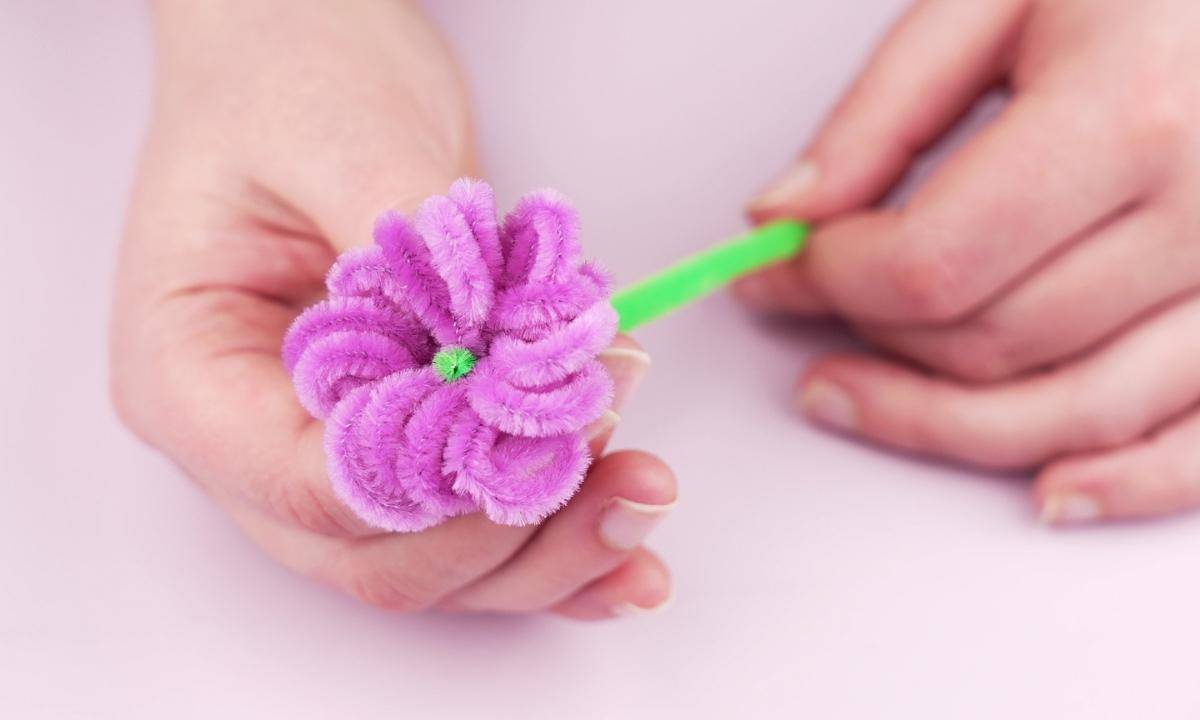
If you have ever wanted to make flowers that never wilt, never need water, and look absolutely beautiful on any shelf or table, pipe cleaner flowers are the answer. This craft is fun, budget-friendly, and works for kids and adults alike.
Whether you want to make a bouquet for Mother’s Day, a handmade gift, or just a colorful decoration for your room, this guide will walk you through everything you need to know.
What Are Pipe Cleaner Flowers?
Pipe cleaner flowers, also called chenille stem flowers, are handmade flowers crafted by bending, twisting, and shaping flexible fuzzy wire sticks into petal and leaf shapes. They look surprisingly realistic because of their soft, fuzzy texture, and they come in every color you can imagine. Once you learn the basics, you can make roses, daisies, tulips, lilies, sunflowers, and more.
Materials You Need
Before you start, gather these simple supplies. Most of them are available at any craft store or dollar store.
| Material | Purpose |
| Pipe cleaners / chenille stems | Main material for petals, leaves, stems |
| Green pipe cleaners | Stems and leaves |
| Floral wire | For stronger, longer stems |
| Floral tape | Wraps and finishes the stem neatly |
| Hot glue gun | Holds petals securely in place |
| Scissors | Cutting pipe cleaners to size |
| Beads or pom-poms | Flower centers for decoration |
| Marker or pencil | Helps shape spiral petals |
You do not need all of these for every flower. For beginner designs like simple daisies or tulips, just a few pipe cleaners and scissors are enough.
How to Make a Simple Pipe Cleaner Flower (Basic Method)
This basic method works for daisies, roses, and generic flower shapes. Once you master this, you can move on to more detailed designs.
- Take 3 colored pipe cleaners and 1 green pipe cleaner.
- Fold all 4 pipe cleaners in half and crease the ends firmly.
- Hold the 3 colored pieces together with the green one crossing through the middle.
- Twist the green pipe cleaner once at the center to pinch everything together.
- Point one end of the green pipe cleaner downward as the stem, and leave the other end free for a leaf.
- Take one colored piece and roll it into a spiral or loop shape to form a petal.
- Repeat for all remaining colored pieces until you have a full flower shape.
- Adjust the petals by gently bending and spreading them to your liking.
- To add a leaf, cut a short piece of green pipe cleaner, fold it into a triangle or oval shape, and pinch it onto the stem.
That’s it. Your first pipe cleaner flower is ready.
How to Make Specific Types of Pipe Cleaner Flowers
How to Make a Pipe Cleaner Rose
Roses look stunning and are easier to make than they look. Here is how to do it:
- Start with a red or pink pipe cleaner and begin coiling it from one end, like a snail shell, to form the center rosebud.
- Keep coiling outward and slightly upward to build up the rose shape.
- To add petals, fold separate pipe cleaners into wide loop shapes and attach them around the center bud.
- Make smaller loops for inner petals and larger loops for outer ones to create a layered, realistic look.
- Press each petal slightly flat with your fingers to give it a natural curve.
- Take a green pipe cleaner and wrap it tightly around the base of the flower to secure everything and form the stem.
- Add leaves by folding a short green piece in half, twisting the bottom, and pinching the sides to form an oval leaf shape.
For extra stability, add a small dot of hot glue at the base of the petals.
Must Read: How to Organize Bathroom Cabinet: Simple Guide
How to Make a Pipe Cleaner Tulip
Tulips are beginner-friendly and look gorgeous in a bouquet.
- Cut 3 pipe cleaners in your chosen color, each about 6 inches long.
- Fold each piece in half to create a petal shape, bending the top slightly outward.
- Hold all 3 folded pieces together and twist the bottom ends tightly to form one cluster.
- Use a green pipe cleaner to wrap around the base and extend downward as the stem.
- Gently spread and curve the top of each petal outward to mimic a real tulip shape.
- You can make a closed bud by keeping the petals close together, or an open bloom by spreading them wider.
How to Make a Pipe Cleaner Daisy
Daisies are one of the easiest and most cheerful flowers to make.
- Cut 6 to 8 white pipe cleaner pieces, each about 3 inches long.
- Bend each piece into a small loop and twist the bottom to close it. These are your petals.
- Hold all petals together in a circle and secure them at the base by wrapping with a short piece of pipe cleaner or wire.
- Cut a small piece of orange or yellow pipe cleaner and fold it into a circle. Glue this to the center of the flower.
- Thread a green pipe cleaner through the base as the stem, and bend the tip slightly to lock it in place.
How to Make a Pipe Cleaner Daffodil
Daffodils have a beautiful trumpet-shaped center that makes them stand out.
- Place a green pipe cleaner on a knitting needle or pencil so the tips line up.
- Starting about 2 inches from the end, tightly wind an orange or yellow pipe cleaner around the needle and the green pipe cleaner.
- Keep winding, making the coils tighter as you reach the tip, to create that classic daffodil center cone shape.
- Carefully slide it off the needle and bend slightly for a more natural look.
- Attach outer white or yellow petals around the cone using the same loop method as the daisy.
Tips for Making Better Pipe Cleaner Flowers
These small tricks will make a big difference in how your flowers look:
- Always twist the base of petals tightly so they hold their shape over time.
- Use a marker or pencil to wrap pipe cleaners around when making spirals. It gives you a perfect, consistent shape.
- If a flower looks too stiff or too perfect, gently bend it a little. Slight imperfections make flowers look more natural.
- Mix colors within a single flower for a gradient or ombre effect.
- Use floral tape to wrap the stem neatly. It gives a clean, professional finish.
- Add beads in the center of your flower using a short wire or pipe cleaner poked through the middle. This adds a nice pop of texture.
Creative Ways to Display Pipe Cleaner Flowers
Once your flowers are done, here are some great ways to show them off:
- Fill a small clay or terra cotta pot with sand, a Styrofoam ball, or dry beans, then poke your flowers into it.
- Tie a ribbon around a bundle of finished flowers to create a beautiful handmade bouquet.
- Trim the stems short and glue a flower to the front of a greeting card or gift wrap.
- Use them in a fairy garden, a decorative wreath, or a flower crown.
- Arrange different flower types together in a glass vase for a colorful, long-lasting display.
Flower Types Comparison Table
| Flower Type | Difficulty Level | Pipe Cleaners Needed | Best For |
| Daisy | Easy | 3 to 4 | Kids, beginners |
| Tulip | Easy | 4 to 5 | Gifts, bouquets |
| Rose | Medium | 5 to 7 | Valentines, decor |
| Daffodil | Medium | 4 to 6 | Spring arrangements |
| Lily | Medium | 6 to 8 | Advanced beginners |
| Sunflower | Easy to Medium | 5 to 8 | Room decoration |
FAQs
How many pipe cleaners do I need to make one flower?
Most simple flowers need 3 to 5 pipe cleaners. Complex flowers like roses or lilies may need 6 to 8.
Can kids make pipe cleaner flowers?
Yes. Basic designs like daisies and tulips are very safe and easy for children, especially with adult help for the hot glue parts.
What type of pipe cleaners are best for flowers?
Standard chenille stems work perfectly. Look for multi-color packs that include green for stems and leaves.
Do I need glue to make pipe cleaner flowers?
Not always. Many simple flower designs hold together with just twisting. Hot glue is helpful for more detailed flowers like roses to keep petals secure.
How do I display pipe cleaner flowers?
You can place them in a vase with sand or a Styrofoam base, tie them into a bouquet with ribbon, or glue them to cards and gift wrap for a decorative touch.
Conclusion
Making pipe cleaner flowers is one of the most satisfying crafts you can try. It costs very little, requires no special skills, and the results look truly beautiful. Whether you are making a rose bouquet for a loved one or a simple daisy with your kids, the process is fun from start to finish.
Start with a basic flower, build your confidence, then try more complex designs like lilies or daffodils. With a pack of chenille stems and a little creativity, you can fill any space with flowers that bloom forever.