
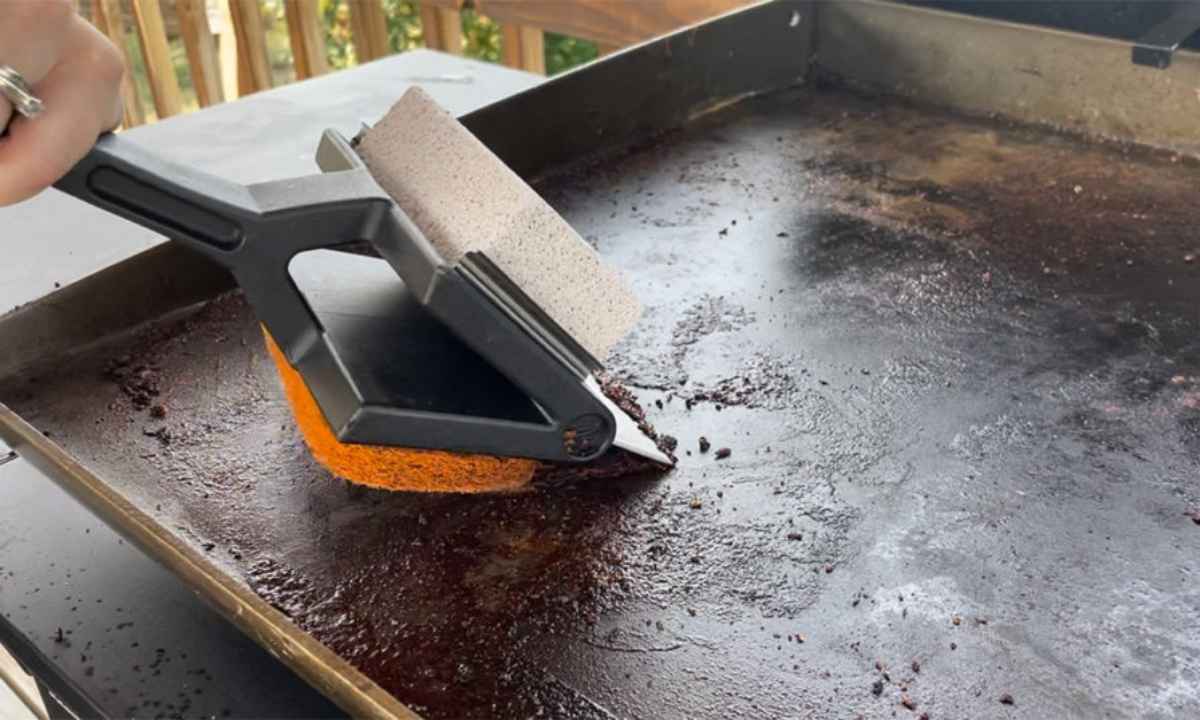
Cleaning a Blackstone griddle is easier than most people think. A few minutes of proper care after each cook protects your flat top surface, prevents rust, and keeps that nonstick coating working like new.
Whether you just bought your first Blackstone or you have been griddling for years, this guide covers everything you need.
Why Cleaning Your Blackstone Griddle Matters
Skipping cleanup is the fastest way to ruin a good griddle. Food particles left on the steel surface attract bacteria, cause uneven heating, and lead to rust. A well-maintained Blackstone can last a lifetime. One that gets ignored will start flaking, corroding, and sticking within months.
Tools You Need to Clean a Blackstone Griddle
You do not need expensive products. Most of what you need is already at home.
| Tool | Purpose |
| Metal scraper or bench scraper | Removes stuck food and grease |
| Paper towels or microfiber cloth | Wipes and dries the surface |
| Plastic squirt bottle | Applies small amounts of water safely |
| Non-metallic scouring pad | Scrubs without scratching the seasoning |
| High-heat cooking oil | Re-seasons after cleaning |
How to Clean a Blackstone Griddle After Cooking
Follow these steps after every single cook session to keep your griddle in top shape.
Step 1: Let the Griddle Cool Slightly
Turn the heat down to low before you start scraping. You do not want to burn yourself, but a warm surface is much easier to clean than a cold one. Never pour cold water on a screaming hot griddle surface as this can cause warping.
Step 2: Scrape Off Food and Grease
Use a metal scraper to push all food debris and grease toward the drip tray. Work in one direction to avoid spreading mess around. Get into the corners because that is where buildup hides most.
Step 3: Use Water to Loosen Stubborn Residue
Squirt a small amount of hot water onto the still-warm surface. This creates steam that loosens stuck-on food. Use only a few tablespoons at a time. Too much water at high heat can warp your griddle. Scrape again after the water does its job.
Step 4: Wipe Down the Surface
Use heavy-duty paper towels to wipe away all the loosened debris, water, and grease. Keep wiping with fresh paper towels until the surface looks clean. Pay extra attention to edges and corners.
Step 5: Dry It Completely
Moisture is the enemy of a steel cooking surface. Wipe the griddle fully dry with a clean paper towel or microfiber cloth. Any water left sitting will start the rusting process.
Step 6: Apply a Thin Layer of Oil
While the surface is still slightly warm, apply a thin coat of high-heat cooking oil such as avocado oil, vegetable oil, or flaxseed oil. Rub it evenly across the entire cooking surface using a folded paper towel. This step re-seasons the griddle and protects it from moisture until your next cook.
How to Clean a Brand New Blackstone Griddle for the First Time
Before you cook on a new griddle, give it a wash with warm soapy water to remove any factory residue or shipping debris. Rinse it well, dry it thoroughly, and then season it with oil before your first use. This is the only time soap should touch your seasoned griddle surface.
How to Deep Clean a Blackstone Griddle
If your griddle has heavy grease buildup or has not been cleaned in a while, a deeper clean is needed.
- Heat the griddle to loosen baked-on grease
- Scrape the surface aggressively with a metal scraper
- Use a Blackstone scouring pad with warm water to scrub the surface
- Wipe away all residue with paper towels
- Dry completely and re-season with 2 to 3 thin coats of oil, letting each coat smoke off before adding the next
Must Visit: How to Clean a Grill Properly for a Spotless and Safe BBQ
How to Remove Rust from a Blackstone Griddle
Rust happens, especially if the griddle gets wet or is stored outdoors. The good news is it is fixable.
Heat the griddle to make rust easier to remove. Scrape off the rust with a metal scraper using firm, consistent strokes. For heavy rust, apply white vinegar to the surface and let it sit for just a few minutes until the rust begins to loosen. Rinse it off quickly with warm water because vinegar left too long will start attacking the steel itself. Dry the surface fully and apply several layers of seasoning oil to restore the protective coating.
What NOT to Do When Cleaning a Blackstone Griddle
Avoid these common mistakes that can damage your griddle:
- Never use soap on a seasoned Blackstone surface as it strips the non-stick layer
- Never use a wire brush as it can scratch and damage the steel
- Never pour large amounts of cold water on a very hot griddle
- Never store the griddle wet or without an oil coat
- Never skip the re-seasoning step after cleaning
How to Store Your Blackstone Griddle Properly
Clean the griddle after every use. Make sure it is fully dry. Apply a thin oil coat. Cover it with a fitted Blackstone cover or store it indoors in a garage or shed. Keeping moisture away is the single best thing you can do to extend the life of your griddle.
Frequently Asked Questions
Can you use soap to clean a Blackstone griddle?
Only use soap on a brand new unseasoned griddle. Soap strips the seasoning from a used griddle and can affect the flavor of your food.
How often should you clean a Blackstone griddle?
Clean your Blackstone after every single use. Regular cleaning prevents grease buildup and rust from forming on the steel surface.
Can you use a wire brush on a Blackstone griddle?
No. Wire brushes can scratch and damage the cooking surface. Use a metal scraper or a non-metallic scouring pad instead.
What oil is best for seasoning a Blackstone griddle after cleaning?
High-heat oils work best. Avocado oil, flaxseed oil, and vegetable oil are all popular choices because they bond well to the steel surface.
Why does my Blackstone griddle keep rusting?
Rust forms when moisture sits on the steel surface. Always dry your griddle completely after cleaning, apply an oil coat, and store it covered in a dry location to prevent rust.
Conclusion
Cleaning a Blackstone griddle takes about five to ten minutes after each cook. Scrape, wipe, dry, and oil. That is the whole process.
Do it consistently and your griddle will stay rust-free, nonstick, and ready to cook incredible meals for years to come. A little effort after every session saves you from a major deep-clean project later.