
Your dishwasher works hard every single day. Yet most Americans never clean it. The result? Cloudy dishes, funky smells, and a machine that’s slowly dying from the inside.
Learning how to clean a dishwasher properly takes less than an hour and saves you hundreds in repair costs. This guide walks you through every step, every tool, and every trick you need.
Why Cleaning Your Dishwasher Is Important
Here’s the irony nobody talks about. A dirty dishwasher makes your dishes dirtier. Grease, food debris, and hard water minerals build up inside the machine over time and contaminate every cycle you run.
Beyond dirty dishes, buildup strains the motor and pump. That shortens your appliance’s lifespan dramatically. The average American dishwasher lasts 9 to 12 years, according to appliance industry data. Skip regular maintenance and you’ll be shopping for a replacement years early. Mold loves warm, moist environments. Your dishwasher is basically a five-star resort for it.
Signs Your Dishwasher Needs Cleaning
Your dishwasher won’t send you a text. But it does leave clues. Watch for these warning signs:
- Dishes come out with a white film or water spots
- A sour or musty smell hits you when you open the door
- Visible gunk collects around the door gasket
- Water pools at the bottom after a cycle ends
- Dishes aren’t coming out fully rinsed
If two or more of those apply to you, it’s time for a deep clean.
What You Need to Clean a Dishwasher
Good news. You probably already own everything required. No special products. No expensive kits.
Vinegar and Baking Soda Method
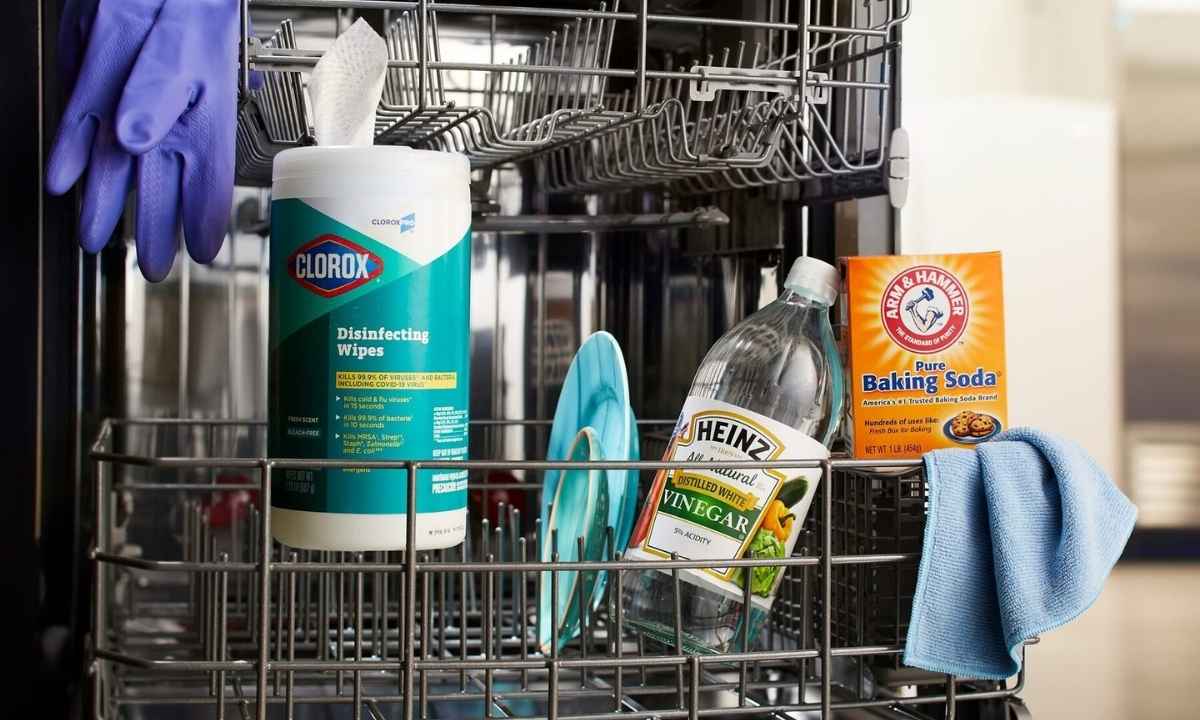
White distilled vinegar cuts through grease and dissolves hard water mineral deposits. Baking soda neutralizes odors and gently lifts stains. Together they form a powerful, chemical-free cleaning combo that’s safe for your dishwasher’s interior and safe for your home.
One important note: use plain white vinegar only. Apple cider vinegar can leave stains behind.
Safe Cleaning Tools
| Use This | Skip This |
| Old toothbrush | Steel wool or abrasive pads |
| Microfiber cloth | Bleach on stainless interiors |
| Soft-bristle brush | Harsh chemical sprays |
| Mild dish soap | Paper towels that shred |
| Small bowl for vinegar | Anything scratchy |
Step-by-Step: How to Clean a Dishwasher Properly
Set aside 30 to 45 minutes. The steps are straightforward and the results are immediately noticeable.
Clean the Filter and Drain
The filter sits at the bottom of the dishwasher, usually beneath the lower spray arm. On popular US brands like Whirlpool, Bosch, and KitchenAid, you remove it by twisting counterclockwise.
Rinse it under warm running water. Scrub away trapped debris using an old toothbrush. Check the drain opening for any food particles and remove them carefully. Lock the filter back into place. This single step fixes most odor and drainage complaints overnight.
Run a Vinegar Wash Cycle
Place a dishwasher-safe bowl filled with one cup of white vinegar on the top rack. Run a hot water cycle with no detergent and no dishes. The hot vinegar steam moves through the entire interior, loosening grease, dissolving deposits, and sanitizing surfaces. Think of it like a steam facial for your appliance. It works fast and costs almost nothing.
Use Baking Soda for Deodorizing
After the vinegar cycle finishes, sprinkle one cup of baking soda along the bottom of the dishwasher. Run a short hot cycle. The baking soda lifts leftover stains and neutralizes any lingering smell.
Pro tip: never mix vinegar and baking soda in the same cycle. They cancel each other out chemically and lose their effectiveness entirely.
Wipe Door and Seals
The rubber door gasket collects hidden mold faster than almost anywhere else. Dip a microfiber cloth in warm soapy water and wipe the entire seal, paying close attention to folds and corners.
Don’t forget the underside of the door. Food residue splashes up there during every cycle. Wipe the control panel gently with a barely damp cloth and dry everything to prevent fresh moisture buildup.
Recommended: How to Clean a Carpet at Home – Easy DIY Guide 2026
How to Remove Bad Smells From a Dishwasher
That funky smell isn’t just unpleasant. It’s a signal something is wrong inside. Most dishwasher odors trace back to three culprits: a clogged filter, trapped debris in the drain, or mold growing on the door seal. The vinegar and baking soda method handles all three in most cases.
For stubborn smells, try running a cycle with a packet of lemon Kool-Aid. The citric acid breaks down deposits and leaves a clean, fresh scent behind. Leaving your dishwasher door slightly open between cycles also prevents mold by allowing moisture to escape.
If the smell resembles sewage, check the drain hose for kinks or clogs. That’s when calling a plumber makes sense.
How Often Should You Clean Your Dishwasher?
| Cleaning Task | Recommended Frequency |
| Full deep clean | Once a month |
| Filter cleaning | Every 2 to 4 weeks |
| Door seal wipe-down | Weekly for heavy users |
| Vinegar wash cycle | Monthly |
| Spray arm check | Every 2 months |
Families running the dishwasher daily should check the filter every two weeks. Smaller households with lighter usage can stretch the full clean to every six to eight weeks comfortably.
Tips to Keep Your Dishwasher Fresh and Efficient
Cleaning it once is great. Keeping it clean is smarter. Scrape dishes before loading but skip the full pre-rinse. Modern dishwashers are actually designed to work with a little food residue present. Pre-rinsing wastes water and confuses the sensors.
Run hot water in your kitchen sink for 30 seconds before starting a cycle. This ensures the dishwasher fills with hot water immediately, improving cleaning performance from the very first spray.
Use a rinse aid consistently, especially if you live in a hard water state like Texas, Arizona, or Florida. Rinse aid prevents spots and keeps your interior cleaner between deep cleans.
Conclusion
Cleaning your dishwasher isn’t complicated. It just takes a little time and the right approach. Start with the filter, run a vinegar cycle, follow it with baking soda, and wipe down those seals.
Do that once a month and your machine will reward you with cleaner dishes, fresher results, and years of extra life. Start today. Even cleaning just the filter makes an immediate difference you’ll notice tonight.